Centralized Wastewater Treatment for Industrial Wastewater
Off-Site Treatment Solutions for Industrial Waste Streams
Industrial facilities generate wastewater in many different ways. Production processes, equipment cleaning, tank cleanouts, maintenance, system flushing, stormwater collection and other routine operations can all create water that contains oils, solids, chemicals, organic material or other contaminants.
Sometimes that wastewater can be managed onsite. Sometimes it can be discharged to a municipal treatment system under an existing permit. In other cases, the material needs another outlet.
Centralized wastewater treatment provides an off-site option for industrial wastewater that requires specialized treatment before it can move to its next destination.
Valicor works with industrial generators to characterize wastewater, identify an appropriate treatment pathway, coordinate transportation and process approved materials through our network of treatment facilities.
Need an outlet for industrial wastewater? Talk with Valicor about your waste stream.
What Is Centralized Wastewater Treatment?
Centralized wastewater treatment, commonly referred to as CWT, is the treatment of industrial wastewater and other approved waste streams received from off-site generators.
Instead of every industrial facility building and operating treatment systems for every wastewater stream it produces, certain materials can be transported to a permitted treatment facility equipped to manage them.
The treatment method depends on what is in the wastewater. Depending on the material and receiving facility, treatment may involve physical separation, settling, filtration, chemical treatment, biological treatment, oil recovery or other processes designed to remove or reduce contaminants.
For the generator, CWT creates an alternative pathway for wastewater that cannot be efficiently handled through its normal onsite or municipal systems.

When Does Industrial Wastewater Need to Be Sent Off-Site?
There is no single point at which every industrial facility should move wastewater off-site.
The decision usually depends on the wastewater itself, available onsite infrastructure, discharge requirements, treatment capacity and operating conditions at the facility.
Off-site treatment may make sense when:
- A wastewater stream is not compatible with an onsite treatment system
- The facility is not permitted to discharge the material directly
- Contaminant concentrations exceed an existing discharge limit
- Wastewater volumes temporarily exceed onsite treatment or storage capacity
- Maintenance, shutdowns or cleanouts generate an unusual waste stream
- Production changes create wastewater with a different chemical profile
- A facility needs an alternate outlet during an operational disruption
- A recurring wastewater stream is more practical to manage through an off-site treatment program
- Existing disposal or land application options become limited or unavailable
For some facilities, CWT is a routine part of wastewater management. For others, it becomes important only during maintenance projects, production changes or unexpected events.
The right solution starts with understanding the individual waste stream rather than assuming every industrial wastewater should follow the same path.
Project Spotlight: 1.83 Million Gallons Treated, 99.3% of the Water Recovered
A Midwest manufacturer sent more than 1.83 million gallons of process wastewater to Valicor for treatment in 2025. Through centralized wastewater treatment, 99.3% of the water contained in the waste stream was recovered, while the program also supported the customer’s broader environmental and sustainability goals.
See how Valicor combined treatment capacity, water recovery and ISO 14001-certified environmental management practices to support a large recurring industrial wastewater program.

What Types of Industrial Wastewater Can Be Treated?
Industrial wastewater is not one uniform material.
Two facilities making similar products can generate very different wastewater depending on raw materials, chemistry, cleaning processes, production methods and how individual streams are collected.
Valicor facilities manage a wide range of approved non-hazardous industrial wastewater streams. Depending on the treatment facility and waste profile, examples may include:
- Oily wastewater
- Oil and water mixtures
- Process wastewater
- Wash water and rinse water
- Tank and equipment cleanout water
- Coolants and certain glycol-containing wastewater
- Metal-bearing rinse water
- Inks and dyes
- Surfactant-containing wastewater
- Organic wastewater
- Leachate
- Sludges and high-solids liquids
- Hydrostatic test water
- Certain stormwater and containment water
- Line flushes and commissioning wastewater
- Other non-hazardous industrial liquid waste streams
This is not an acceptance list. Every waste stream must be evaluated individually before it can be approved for a Valicor facility.
Composition, concentration, contaminants, solids, pH, physical characteristics and the process that generated the wastewater can all affect where and how the material can be managed.
Oily Wastewater
Water mixed with oils, fuels, lubricants and similar hydrocarbons may require separation and treatment before the water can move through an appropriate discharge pathway.
Explore Oily Wastewater Treatment
Hydrostatic and System Flush Water
Pipeline testing, equipment commissioning and system flushing can generate large volumes of water over a relatively short period, sometimes with suspended solids, corrosion inhibitors, metals or other process-related constituents.
Explore Hydrostatic Test Media Waste Solutions
Glycol and Coolant Wastewater
Cooling-system maintenance, manufacturing processes and equipment servicing can generate wastewater containing glycol or other coolant chemistry.
Learn About Glycol & Antifreeze Recycling
Containerized Wastewater
Not every wastewater project arrives by tanker.
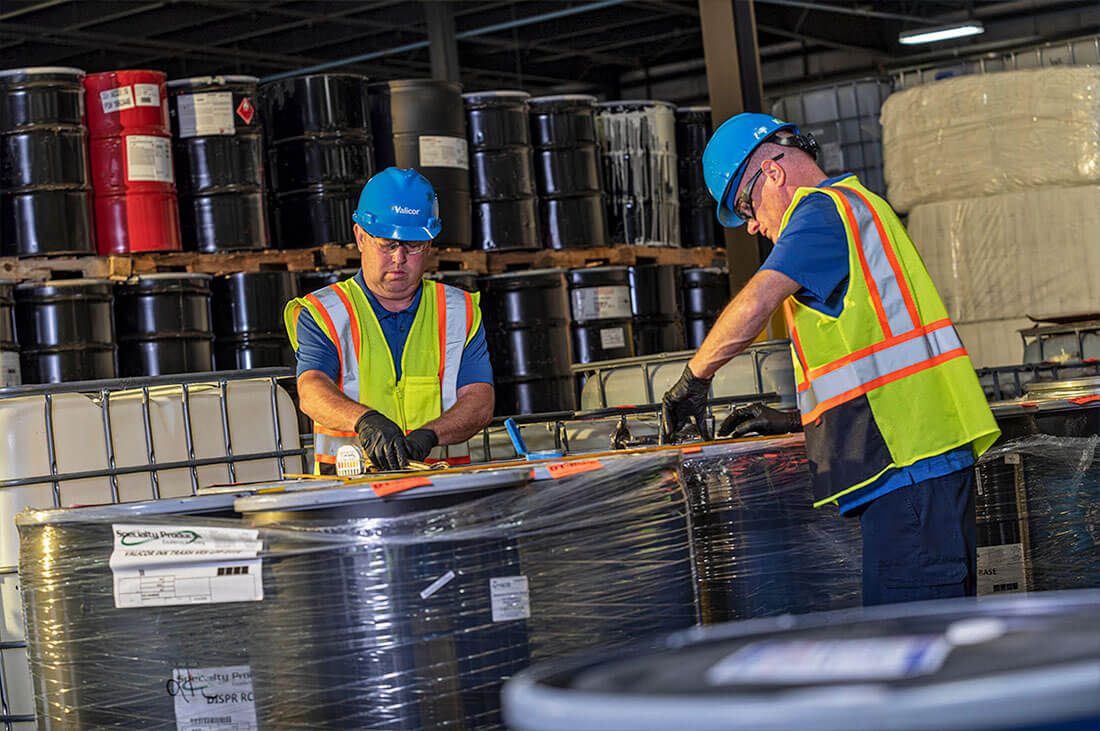
Industrial wastewater and process residuals can also accumulate in drums, totes and other containers, particularly after maintenance projects, production changes and facility cleanouts.
Wastewater Acceptance Starts With the Waste Profile
Before industrial wastewater is transported to a treatment facility, the receiving facility needs to understand what it is being asked to manage.
That is the purpose of wastewater profiling.
A waste profile provides information about the material, how it was generated and the characteristics that may affect transportation, storage and treatment.
Depending on the waste stream, this evaluation can include:
- The industrial process that generated the wastewater
- Chemical composition
- pH
- Solids content
- Oil and grease
- Metals
- Organic loading
- Flash point where relevant
- Existing laboratory analysis
- Safety Data Sheets
- Estimated volume
- Frequency of generation
- Changes in production or raw materials that could affect the stream
Additional sampling or analytical testing may be required when existing information is not sufficient.
The goal is to identify an appropriate outlet before the material leaves the generator's facility.
A wastewater profile is not simply paperwork attached to a shipment. It helps determine whether the receiving facility is permitted and equipped to safely manage the material and what treatment pathway should be used.
How Off-Site Industrial Wastewater Treatment Works
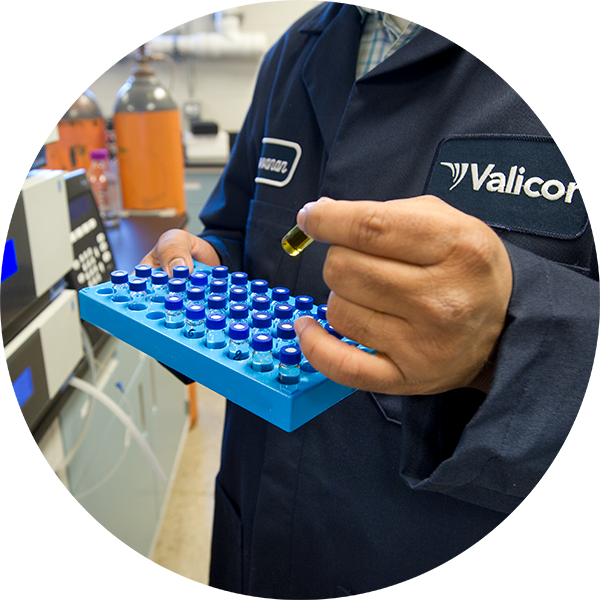
1. Characterize the Wastewater
The process begins with understanding how the wastewater was generated and what it contains.
Existing process knowledge, analytical results, SDS information and other documentation help establish the characteristics of the waste stream.
2. Profile and Approve the Material
Valicor reviews the wastewater against the capabilities and acceptance requirements of the appropriate receiving facility.
If additional information or testing is needed, that can be identified before transportation is scheduled.
3. Determine the Treatment Pathway
Not every wastewater stream follows the same treatment process.
The material's chemistry and physical characteristics help determine the receiving facility and treatment methods required.
4. Schedule Transportation
Once the material is approved, transportation can be coordinated based on volume, container type, facility capacity and customer timing.
Valicor's transportation network connects customer locations with our treatment facilities and helps keep material moving as operating needs change.
5. Receive and Treat the Wastewater
At the treatment facility, the wastewater enters a treatment process appropriate for the approved waste stream.
Depending on the material, treatment can separate oil, remove solids, adjust chemistry, reduce organic loading or address other constituents.
6. Manage Treated Water and Residuals
Wastewater treatment does not make the water disappear.
Treatment removes or reduces contaminants. The resulting treated water can then follow an approved discharge or reuse pathway, while separated oils, solids, sludge and other residual materials require their own appropriate management.
What Happens Inside a Centralized Wastewater Treatment Facility?
The exact treatment system varies by facility and waste stream,
but centralized treatment generally uses a combination of processes rather than a single treatment step.
A wastewater stream may move through processes such as:
Screening and Solids Removal
Larger solids and debris may need to be removed before other treatment processes can operate effectively.
Oil and Water Separation
Wastewater containing free or emulsified oils can require physical or chemical separation to recover oil and isolate it from the water fraction.
Settling and Clarification
Suspended material can be separated from water through gravity, chemical treatment or other clarification processes.
Biological Treatment
Certain organic wastewater streams may be treated biologically, allowing microorganisms to break down biodegradable organic material.
Filtration or Additional Polishing
Additional treatment may be used when required to prepare water for the facility's permitted discharge pathway.
The resulting treatment residuals are managed separately based on their characteristics. That can include recovered oils, sludge, concentrated solids and other separated materials.
The specific combination is determined by the wastewater and the capabilities of the treatment facility receiving it.
CWT Treatment, POTW Discharge, Solidification or Disposal?
These terms are sometimes used as though they describe competing versions of the same service.
They actually represent different parts of industrial waste management.
Centralized Wastewater Treatment
CWT is intended to treat compatible industrial wastewater so contaminants can be separated, removed or reduced.
The primary objective is treatment of the liquid stream.
Direct POTW Discharge
Some industrial facilities are authorized to discharge certain wastewater directly to a publicly owned treatment works, or POTW.
That option depends on local pretreatment requirements, discharge permits and the characteristics of the wastewater.
A municipal wastewater plant is primarily designed to treat wastewater generated within its service area. Industrial streams that fall outside its acceptance requirements may need pretreatment or an alternate outlet.
Solidification
Some liquid or sludge waste is better suited for solidification rather than wastewater treatment.
Solidification combines liquid material with absorbent or binding material to create a solid waste suitable for an approved disposal pathway.
It does not serve the same purpose as wastewater treatment and generally does not recover the water portion of the waste stream.
Disposal
Some industrial materials cannot be economically or technically treated, recycled or reused and ultimately require disposal.
The appropriate pathway depends on the characteristics of the material and applicable regulations.
The Waste Stream Determines the Pathway
The goal should not simply be to identify somewhere that will accept the material.
Understanding what the wastewater contains can reveal treatment, recovery or reuse options that would be missed if every liquid waste stream were approached strictly as a disposal problem.
Treatment Can Create Opportunities Beyond Disposal
Some industrial wastewater contains materials that can be separated or recovered during treatment.
Oily wastewater is a common example. Treatment may separate recoverable hydrocarbon material from water rather than managing the entire incoming volume as a single waste stream.
Other wastewater may contain chemical, organic or process characteristics that create potential recovery or beneficial reuse options.
Those opportunities depend heavily on chemistry, concentration, contamination and geography, and not every wastewater stream will qualify.
But understanding the material before mixing or disposing of it can preserve options.
Want to learn more? Read our post about The Hidden Cost of Mixing Waste Streams.

Transportation Is Part of the Treatment System
For an industrial facility, finding an approved treatment outlet is only part of the problem.
The material also has to move from the generator to that outlet reliably.
A missed pickup during routine production can create storage problems. During a shutdown, cleanout or large project, transportation constraints can quickly become an operational bottleneck.
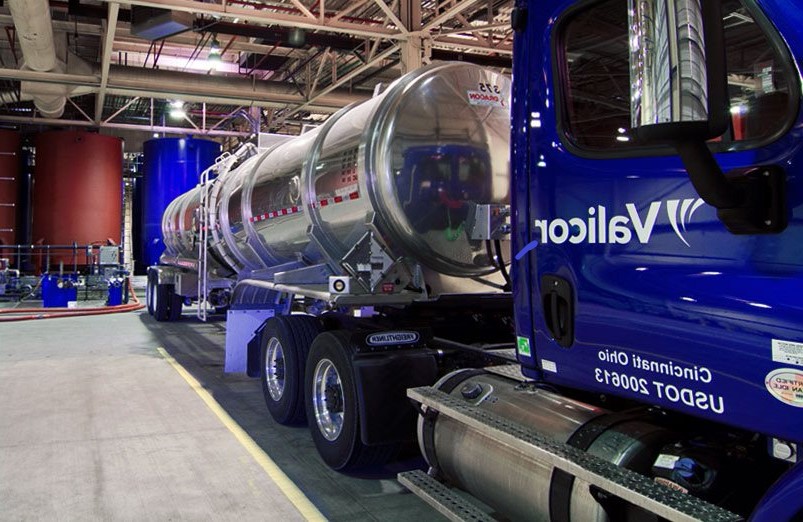
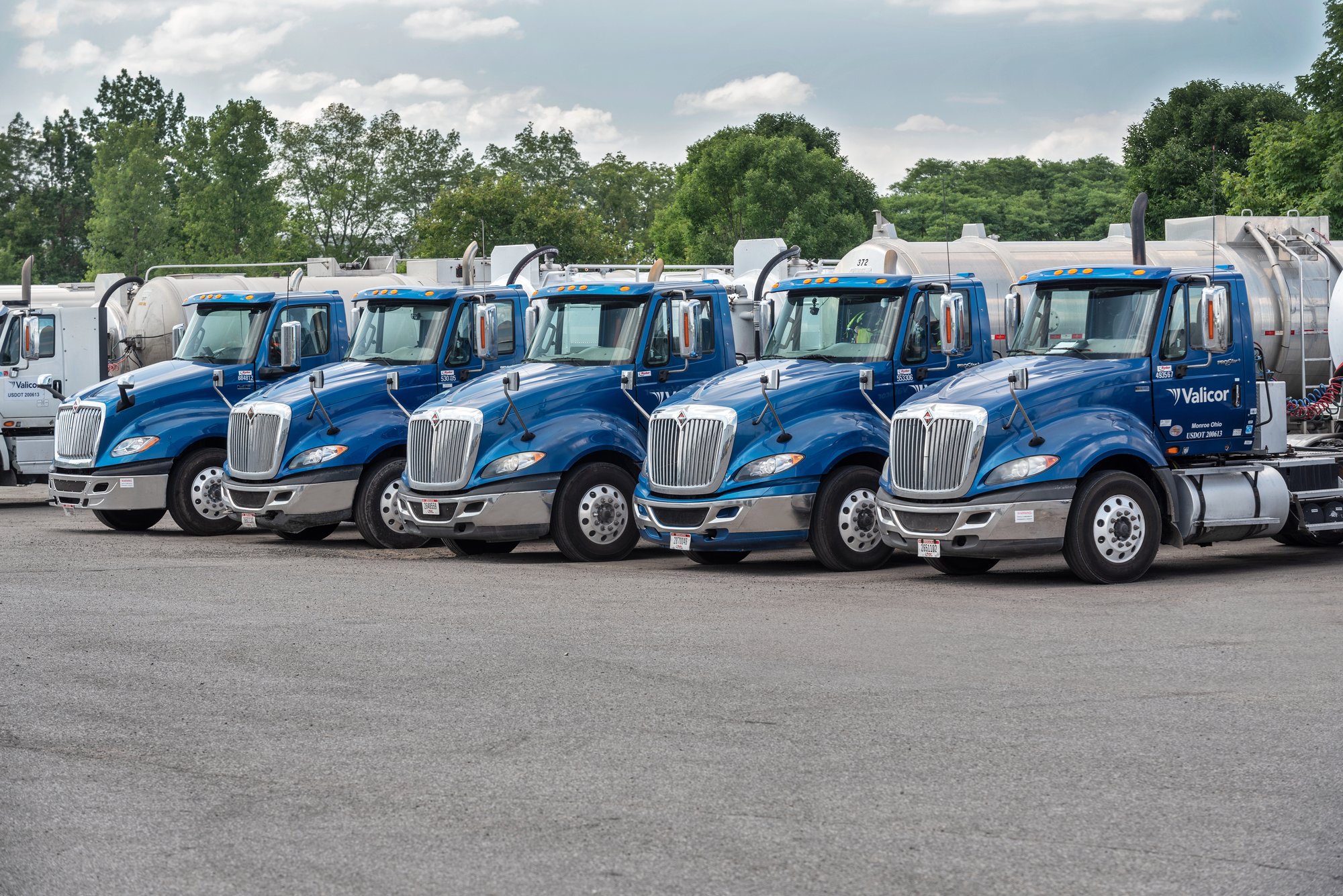
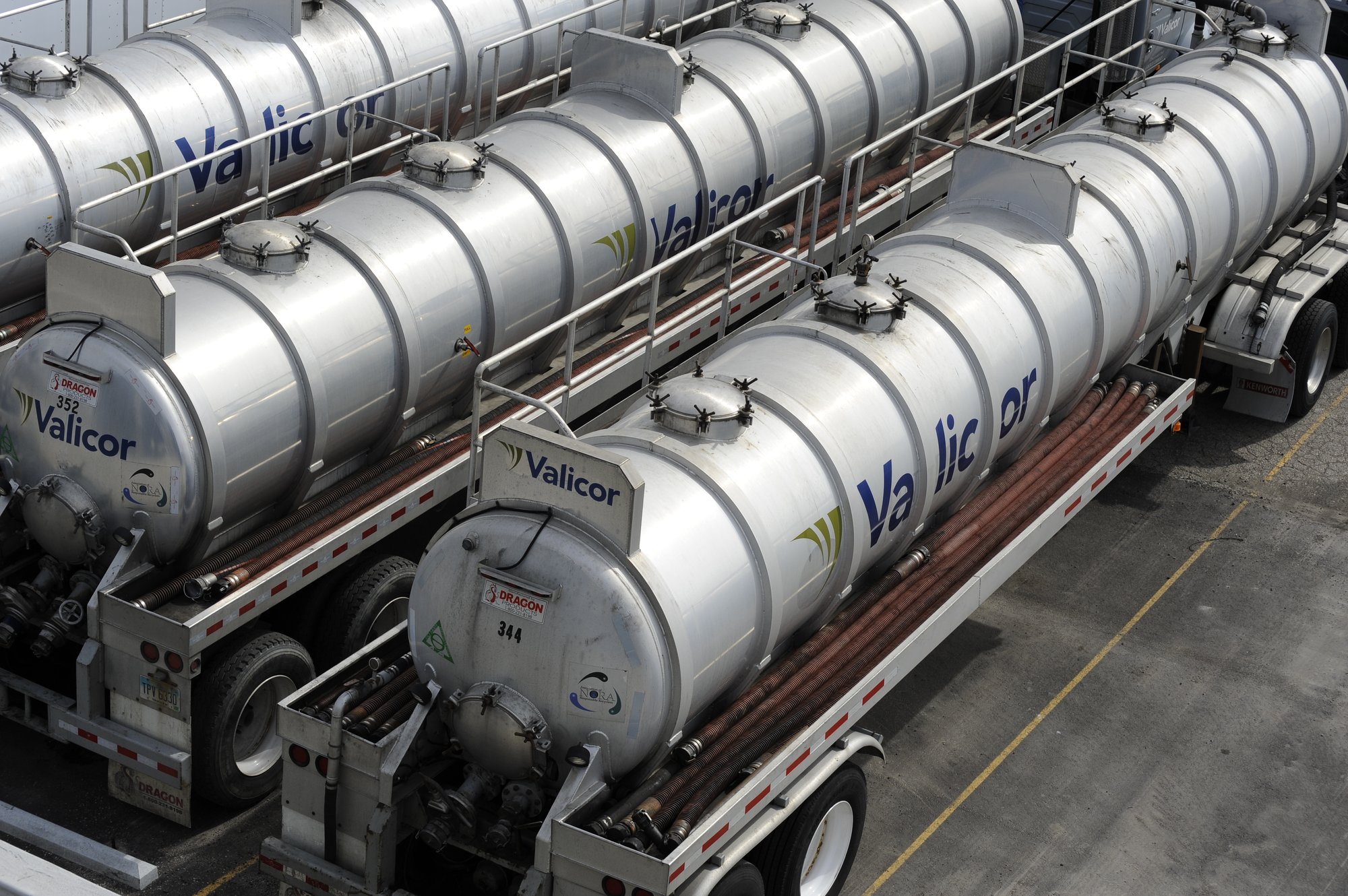
Valicor operates its own transportation resources to support our treatment network and customers. Transportation and treatment planning can therefore be coordinated as parts of the same system rather than managed as completely separate activities.
That becomes particularly valuable when:
- Wastewater volumes change unexpectedly
- A project produces a large amount of material over a short period
- Storage capacity onsite is limited
- Multiple pickups need to be coordinated
- A customer operates several facilities
- An alternate treatment location is needed
- Treatment capacity and transportation schedules need to change together
The closest treatment facility is not always the only treatment option. A broader network can provide flexibility when waste characteristics, project schedules or local capacity change.
Why a Network of Treatment Facilities Matters
Industrial wastewater rarely fits neatly into one standard treatment process.
A wastewater stream that works well at one receiving facility may require different capabilities at another. Volumes can change. Chemistry can change. Projects can create short-term demand that is very different from a facility's normal waste generation.
That is where a network approach becomes useful.
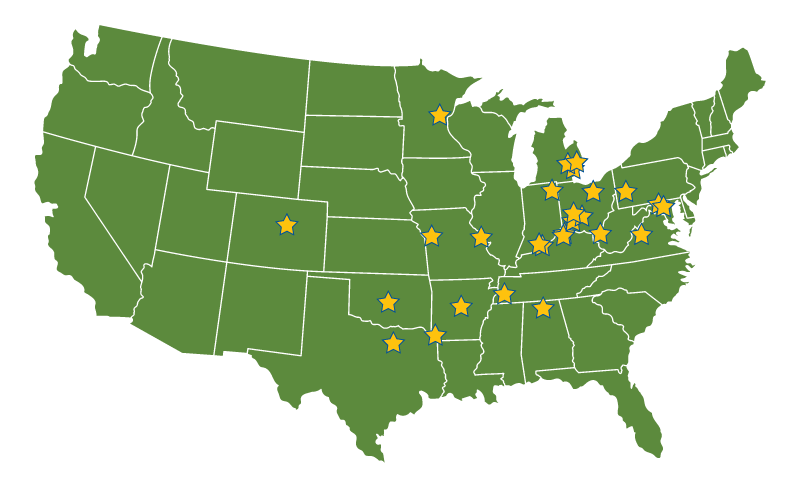
Valicor operates treatment facilities and related waste-management capabilities across multiple industrial regions of the United States.
That footprint can provide access to different treatment technologies, receiving capabilities and transportation resources rather than limiting every waste stream to the closest single outlet.
For companies operating multiple plants, a broader network can also make it possible to develop more consistent regional or multi-site wastewater management programs.
Centralized Wastewater Treatment Across the Valicor Network
Wastewater treatment capabilities vary by Valicor location, and individual waste streams must be profiled and approved for the facility that will receive them.
Our network serves industrial customers across many of the country's major manufacturing and processing regions.
Ohio and the Midwest
Valicor has a significant concentration of facilities across Ohio and the Midwest, supporting manufacturing, automotive, chemical, food and beverage and other industrial operations.
Multiple locations across the region provide access to industrial wastewater treatment, oily wastewater management, transportation and additional waste services.
For companies operating multiple facilities throughout the Midwest, this network can also help support more standardized waste-management programs across a broader footprint.
Michigan and the Great Lakes
Michigan's automotive, manufacturing and industrial base generates wastewater from production, cleaning, metal finishing, equipment maintenance and numerous other processes.
Valicor locations throughout Southeast Michigan provide access to wastewater treatment and supporting transportation capabilities across the region.
Texas and the South Central U.S.
Texas includes some of the country's largest manufacturing, energy, logistics and infrastructure markets.
Valicor supports customers in North and East Texas and surrounding markets with industrial wastewater treatment, oily wastewater management, transportation and other specialized waste services.
Growing industries such as data center construction and operation can also create large project-based wastewater streams requiring profiling, transportation and treatment.
Kentucky, West Virginia and the Ohio Valley
Manufacturing, chemicals, energy and other heavy industrial operations throughout the Ohio Valley generate a wide variety of recurring and project-based wastewater streams.
Valicor's regional network supports customers with treatment, transportation and additional industrial waste-management options across Kentucky, West Virginia and neighboring markets.
Alabama and the Southeast
Valicor's growing Southeast network supports automotive manufacturing, metals, chemicals, food and beverage and other industrial operations across Alabama and surrounding markets.
Wastewater treatment, oily wastewater management, organics processing, solidification and transportation capabilities can provide multiple options for facilities managing different waste streams.
Missouri, Arkansas and the Central U.S.
Valicor serves industrial customers across Missouri, Arkansas and nearby markets where manufacturing, food and beverage, energy, distribution and other industries generate recurring wastewater and process residuals.
Regional treatment and transportation resources can help support both routine service and project-based wastewater needs.
Choosing an Off-Site Wastewater Treatment Partner
Industrial wastewater management involves more than comparing disposal prices.
Before selecting an outlet, facilities may want to understand:
Is the Waste Stream Properly Profiled?
The receiving facility should understand the material before it arrives.
Is the Facility Permitted to Manage the Wastewater?
Acceptance should be based on treatment capabilities and regulatory requirements, not simply available storage capacity.
What Happens to the Wastewater After It Arrives?
Generators should understand whether the material is being treated, separated, recycled, solidified or disposed of.
Who Coordinates Transportation?
Treatment capacity has limited value if transportation cannot reliably move the material.
What Happens When Volumes or Chemistry Change?
Industrial processes are not static. A wastewater management program should account for production changes, shutdowns, maintenance projects and other changes to the waste stream.
Are Other Management Options Available?
Treatment may be the right answer, but recovery, recycling, beneficial reuse or other management pathways may sometimes provide a better option.
A strong wastewater program evaluates the material first and builds the management strategy around it.
Start With the Waste Stream
Industrial wastewater management does not have to begin with choosing between treatment, disposal, recycling or another outlet.
It begins with understanding the material.
Tell us what generates the wastewater, what you know about its composition, how much you have and how frequently you generate it. From there, Valicor can help evaluate available treatment and management options across our network
Frequently Asked Questions About Centralized Wastewater Treatment
What is a centralized wastewater treatment facility?
A centralized wastewater treatment facility receives approved wastewater and industrial waste streams generated at other locations and processes those materials using permitted treatment systems. Unlike an onsite industrial treatment plant that manages wastewater generated by one operation, a CWT facility can receive compatible waste streams from multiple industrial generators.
What types of industrial wastewater can a CWT facility accept?
Acceptance varies by facility. Common streams can include oily wastewater, process water, wash and rinse water, coolant-containing water, organic wastewater, leachate, certain sludges, metal-bearing rinse water and other non-hazardous industrial wastewater.
Every material must be evaluated and approved before shipment.
How do I know whether my wastewater can be accepted?
The first step is a waste profile. Information about the process that generated the wastewater, chemical composition, physical characteristics and available analytical data can help determine whether the material is compatible with a Valicor treatment facility.
Additional sampling or laboratory testing may sometimes be required.
Do I need laboratory analysis before sending wastewater off-site?
Not always.
Existing analytical data, SDS information and detailed process knowledge may provide enough information for an initial evaluation. Other waste streams require sampling and laboratory analysis before they can be approved.
The required information depends on the material and receiving facility.
Can wastewater in drums and totes be sent to a CWT facility?
In many cases, yes.
Industrial wastewater is not limited to bulk tanker quantities. Approved wastewater and process residuals may also be managed in drums, totes and other containers depending on the receiving facility and material.
What contaminants can affect wastewater acceptance?
Many characteristics can affect whether and where wastewater can be treated, including pH, solids, oils, metals, organics, solvents, salts and other chemical constituents.
Concentration matters as well. Two wastewater streams containing the same constituent may require different management approaches depending on how much is present and what else is mixed with it.
That is why profiling is performed before acceptance.
What happens to wastewater after it is treated?
Treatment separates, removes or reduces contaminants from the incoming wastewater.
Depending on the treatment facility and applicable permits, the treated water may then move through an approved discharge or reuse pathway. Oils, solids, sludge and other materials removed during treatment are managed separately based on their characteristics.
What is the difference between wastewater treatment and solidification?
Wastewater treatment is intended to separate or reduce contaminants in a liquid waste stream.
Solidification uses absorbent or binding material to convert liquid or sludge into a solid material for an approved disposal pathway.
Which option is appropriate depends on the waste stream, chemistry, treatment capability and available outlets.
Can Valicor transport wastewater from my facility?
Valicor operates transportation resources that support our treatment facilities and customers. Depending on the project, material can be transported in bulk or appropriate containers after the waste stream has been profiled and approved.
Can Valicor manage wastewater from multiple company locations?
Yes. Valicor's network can support customers operating multiple facilities, although each waste stream and generating location may require appropriate profiling and approval.
For companies with similar operations across multiple plants, a network approach can help create greater consistency in treatment, transportation and waste-management planning.
Ready to Get Started?
Let’s design a waste management plan that keeps your operation compliant, efficient, and sustainable.
Contact Us Today
Connect with our team to request profiling, schedule service, or learn more about our nationwide capabilities.

Since 2024, Valicor has been a participant and supporter of the United Nations Global Compact, demonstrating our commitment to sustainable development.
Interested in learning more about Valicor's commitment to sustainability?
Download Our Complete 2025 Sustainability Report
Ready to Talk with Us?
Start a conversation with us today!